Married With an Age Gap: The Reverse Mortgage Spouse Rules
The scariest reverse mortgage stories almost all come from loans written under the old rules. If your spouse is under 62, the protections that exist today are worth understanding before you decide anything.
By Morgan Hayes · September 2026
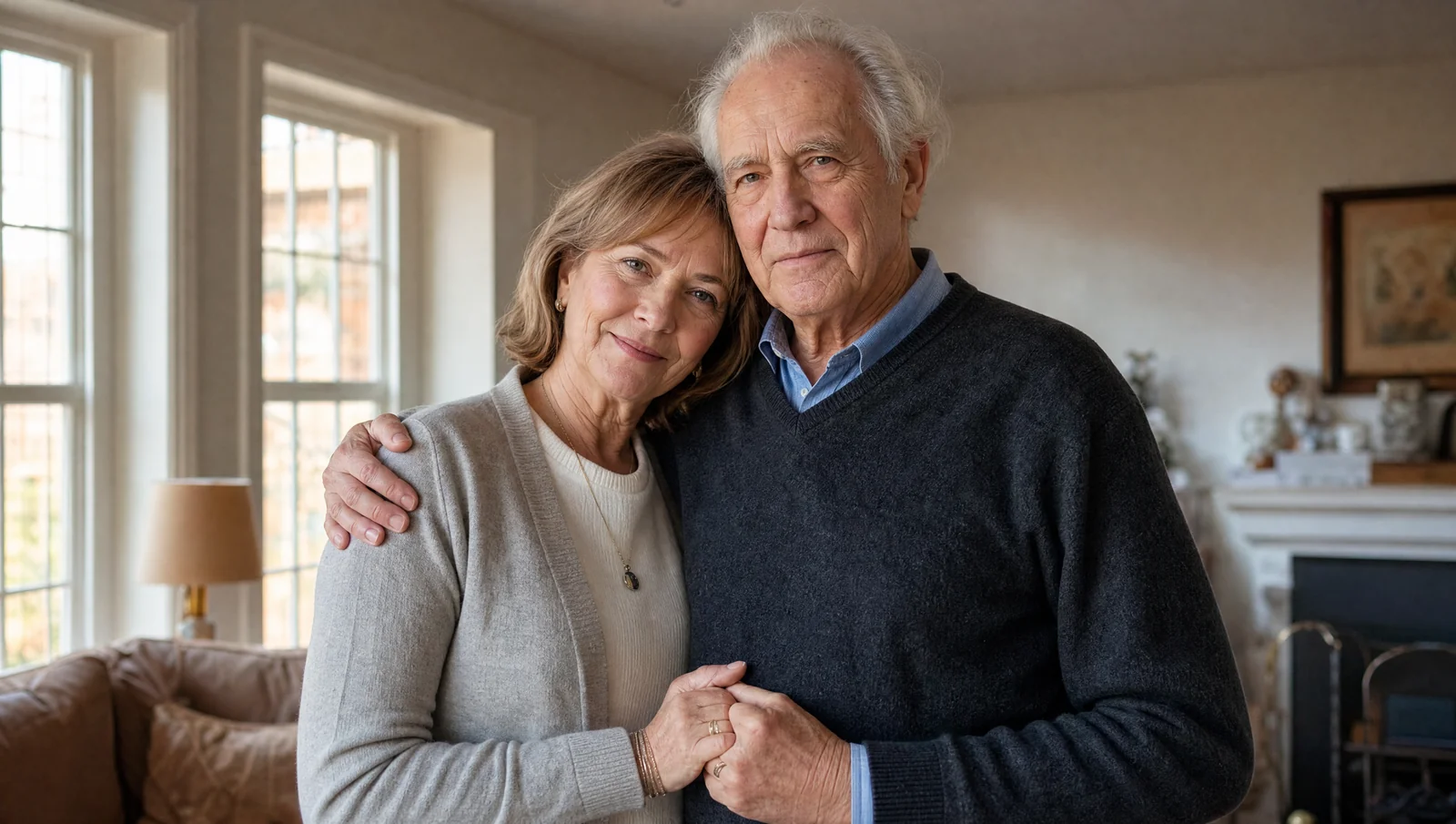
There is a question that comes up over and over when couples research reverse mortgages, and it is almost always asked by the older spouse: "What happens to my wife if I die first?" Or the mirror version, asked quietly by the younger one: "Would I lose the house?"
It is the right question. A reverse mortgage is secured by your home, and for most couples the home is the single largest thing they own. When one spouse is under 62, or simply much younger, the rules get more complicated, and the stakes of misunderstanding them are as high as stakes get.
Here is the reassuring part up front. Most of the frightening stories you have read, the widow served with foreclosure papers, the surviving husband told the loan was due in full, trace back to loans written before the rules changed in 2014. The current framework looks very different. This article explains what changed, who is protected, who is not, and the real trade-off couples with an age gap need to weigh.
Part One
The Pre-2014 Problem That Started It All
For years, reverse mortgages had a structural gap that hurt couples with an age difference. To take out a Home Equity Conversion Mortgage (HECM), the federally regulated type of reverse mortgage that dominates the market, every borrower had to be 62 or older. If one spouse was younger, there was a workaround that lenders sometimes suggested: take the younger spouse off the title and write the loan in the older spouse's name alone.
Some couples did this because they had no choice, since the younger spouse could not be a borrower. Others did it because leaving the younger spouse off actually increased the payout, as the loan amount was calculated on the older spouse's age alone. Either way, the younger spouse ended up with no legal relationship to the loan.
Then the borrowing spouse died. Under the old rules, the loan became due and payable at that moment. The surviving spouse, who had lived in that home for decades, was suddenly facing a demand for full repayment. If they could not refinance or pay off the balance, the home went to foreclosure sale. Lawsuits followed, including cases that went through federal court, and the coverage of those cases is the source of most of the fear that still surrounds this topic.
What we found
When we researched this topic, nearly every alarming personal account we could trace had one thing in common: a loan originated before August 4, 2014, with a spouse left off the loan documents. The fear is real and was earned. It is also, for new loans, largely about a rulebook that no longer applies.
Part Two
What Changed in 2014, and What Makes a Spouse "Eligible"
In 2014, the Department of Housing and Urban Development rewrote the rules for new HECM loans. For any loan with a case number issued on or after August 4, 2014, a spouse who is not a borrower can be formally recognized as an "eligible non-borrowing spouse." That designation is the difference between staying in the home and losing it. When the borrowing spouse dies, an eligible non-borrowing spouse can remain in the home, and repayment of the loan is deferred for as long as they meet the ongoing conditions. As of 2026 these protections are a settled, central part of the program rather than an afterthought.
The protection is not automatic, and this is the part nobody explains clearly. The rules divide non-borrowing spouses into two categories, eligible and ineligible, and the label is set by how the loan is originated, not by anything you can fix later.
Eligible non-borrowing spouse: the checklist
- Married at origination. You were married to the borrower (or in a legally recognized partnership) when the loan closed, and remained married through the borrower's lifetime.
- Disclosed and named in the loan documents. You were identified as a non-borrowing spouse in the paperwork at closing. This is not a box you can check retroactively.
- The home is your principal residence. You lived in the home when the loan closed and continue to live there as your primary residence.
- The obligations stay current. Property taxes, homeowners insurance, and basic upkeep are maintained, both during the loan and after the borrower's death.
Miss any one of these, and the deferral protection does not apply. A spouse who married the borrower after closing, or who was never named in the documents, is generally an ineligible non-borrowing spouse, and for them the old outcome still looms: the loan comes due when the borrower dies.
Worth knowing
The single most important moment in this entire process is the day the loan documents are signed. Whether the younger spouse is named as a non-borrowing spouse at closing determines everything that happens decades later. This is one of the topics the mandatory HUD counseling session exists to cover, and it is worth asking about explicitly rather than assuming it is handled.
Part Three
What "Deferral" Actually Means Day to Day
Deferral is the technical word, but here is what it means in practice for a surviving eligible non-borrowing spouse. You stay: you can continue living in the home, and no repayment demand arrives because your spouse died. The loan pauses, it does not disappear: the balance continues to exist and accrue interest, becoming due when you pass away, move out permanently, or sell.
"The deferral rule protects the roof over your head. It does not protect the income. A surviving non-borrowing spouse keeps the home but loses access to any remaining loan funds."
That is the limitation people miss. A non-borrowing spouse cannot take further draws from the loan. If the reverse mortgage had a line of credit or monthly payments, those end when the borrower dies. The surviving spouse keeps the house but not the income stream, which matters enormously for household budgeting. And the obligations continue: property taxes, insurance, and maintenance remain your responsibility, and falling behind on these is the most common way surviving spouses lose the protection, so building those costs into a long-term budget is not optional.
Part Four
The Price of Protection: A Younger Spouse Lowers the Payout
Here is the honest trade-off that comes with the modern rules. When a couple takes out a HECM and one spouse is younger, the amount they can borrow, called the principal limit, is calculated using the age of the youngest spouse, whether that spouse is a co-borrower or a non-borrowing spouse.
The logic is straightforward. A reverse mortgage is designed to last as long as the home is occupied, and a younger spouse means the loan will likely run longer, accruing interest for more years. To account for that, the program allows a smaller percentage of the home's value to be borrowed. As a general informational pattern, older borrowers can access a larger share of their equity and younger ages reduce that share meaningfully. The exact percentage depends on age, current interest rates, and home value, up to the 2026 FHA lending limit of $1,249,125. What that means for any specific household is a question for a lender's quote and a HUD-approved counselor, not for an article. How the calculation works in more depth is covered in how much a reverse mortgage actually pays.
The couples in the strongest position are those where both spouses are 62 or older and both are on the loan as co-borrowers. Both are fully protected, both can access remaining funds if one dies, and the deferral rules never even come into play. If you are close to that threshold, it changes the math.
Part Five
Wait or Proceed: The Age-Gap Decision Framework
For couples where one spouse is under 62, the decision usually comes down to three questions. First, how far from 62 is the younger spouse? If the answer is one or two years, waiting has a strong case: the younger spouse becomes a co-borrower with full protections and continued access to funds, and the principal limit improves. If the answer is ten years, waiting may not be realistic, and the eligible non-borrowing spouse framework exists precisely for that situation.
Second, can the surviving spouse carry the home alone? Model the scenario honestly. If the borrowing spouse dies, the survivor keeps the house but loses any remaining draws. Can they cover taxes, insurance, and upkeep on their own income? If yes, the protection is solid. If no, the deferral right may protect a home they cannot afford to keep, and that is worth knowing before closing rather than after.
Third, is the equity working harder inside the loan or outside it? Home equity is an asset like any other, and a reverse mortgage is one way to put it to use without selling or taking on a monthly payment. Whether it is the right way depends on your other resources, your plans for the home, and your heirs. Our overview of when a reverse mortgage makes sense walks through that broader question.
Whatever direction you lean, two structural features of the program work in your favor. HECM loans are non-recourse, meaning neither you nor your heirs will ever owe more than the home is worth when the loan is repaid. And the loans are FHA-insured, which backs that guarantee; the loan itself comes from a private lender, with FHA providing the insurance. If interest earnings or tax treatment factor into your planning, consult a tax advisor regarding the tax implications of any equity decision. If you are earlier in your research, start with how reverse mortgages work, which covers the mechanics this article builds on.
Common Questions
Questions About Spouses and Age Gaps
Can I get a reverse mortgage if my spouse is under 62?
Yes. Only the borrowing spouse needs to be 62 or older. A spouse under 62 cannot be a co-borrower, but on loans originated after August 4, 2014 they can be named as an eligible non-borrowing spouse, which allows them to remain in the home if the borrower dies first. The loan amount will be calculated using the younger spouse's age, which reduces how much you can borrow.
What happens to a non-borrowing spouse when the borrower dies?
If the surviving spouse qualifies as an eligible non-borrowing spouse, repayment of the loan is deferred and they can stay in the home for as long as it remains their principal residence and taxes, insurance, and upkeep stay current. They cannot take any further draws from the loan. An ineligible non-borrowing spouse does not receive this protection, and the loan becomes due when the borrower dies.
What made older reverse mortgages so dangerous for surviving spouses?
Before August 2014, a spouse who was not on the loan had no protection at all. When the borrowing spouse died, the full balance came due, and surviving spouses who could not repay it faced foreclosure. Those cases generated most of the reverse mortgage horror stories still circulating today. Loans originated under the current rules include the non-borrowing spouse protections that the old loans lacked.
Does a younger spouse reduce how much we can borrow?
Yes. The principal limit on a HECM is calculated using the age of the youngest spouse, borrower or not. Younger ages allow a smaller percentage of the home's value to be borrowed, because the loan is expected to run longer. The exact figure depends on age, interest rates, and home value, up to the 2026 FHA lending limit of $1,249,125.
Should we wait until my spouse turns 62 before applying?
It depends mostly on how long the wait is. If the younger spouse is within a year or two of 62, waiting means both spouses can be co-borrowers, which is the strongest position: full protection for both, continued access to funds for the survivor, and a higher principal limit. If the gap is many years, the eligible non-borrowing spouse route may make more sense. A HUD-approved counselor can walk through both scenarios with your actual numbers.
The Bottom Line
The Rules Changed, but the Paperwork Still Decides
The fear that drives this question, a surviving spouse losing the home, was justified once, and for loans written under today's rules it is largely solved. An eligible non-borrowing spouse can stay in the home for life, with repayment deferred, as long as the loan documents named them correctly at closing and the taxes, insurance, and upkeep stay current. The protection is real, federal, and settled. What it costs you is a lower borrowing limit, calculated on the younger spouse's age, and the loss of further draws after the borrower dies.
That makes this less a question of whether the protection exists and more a question of whether the numbers work for your household, now and in the survivor scenario. Every situation has its own math, which is why HUD counseling is mandatory before any HECM closes. Confirm the current rules and your own eligibility with a HUD-approved counselor before signing anything, and make sure the non-borrowing spouse designation is in the documents, not just in the conversation.
See If Your Home Qualifies arrow_forwardA few questions, about two minutes. No credit check, no obligation.